

Journey to the Past: An Interview with Children’s Book Author Parabjot Kaur Singh
/
May is Asian Heritage Month in Canada, a time to recognize and reflect on the histories, cultures, and contributions of Asian communities across the country, as well as the injustices that have shaped many of those experiences.
One such moment in Canadian history is the Komagata Maru incident, a 1914 case in which a ship carrying Sikh passengers from the Province of Punjab in then-British India was denied entry into Canada under discriminatory immigration laws.
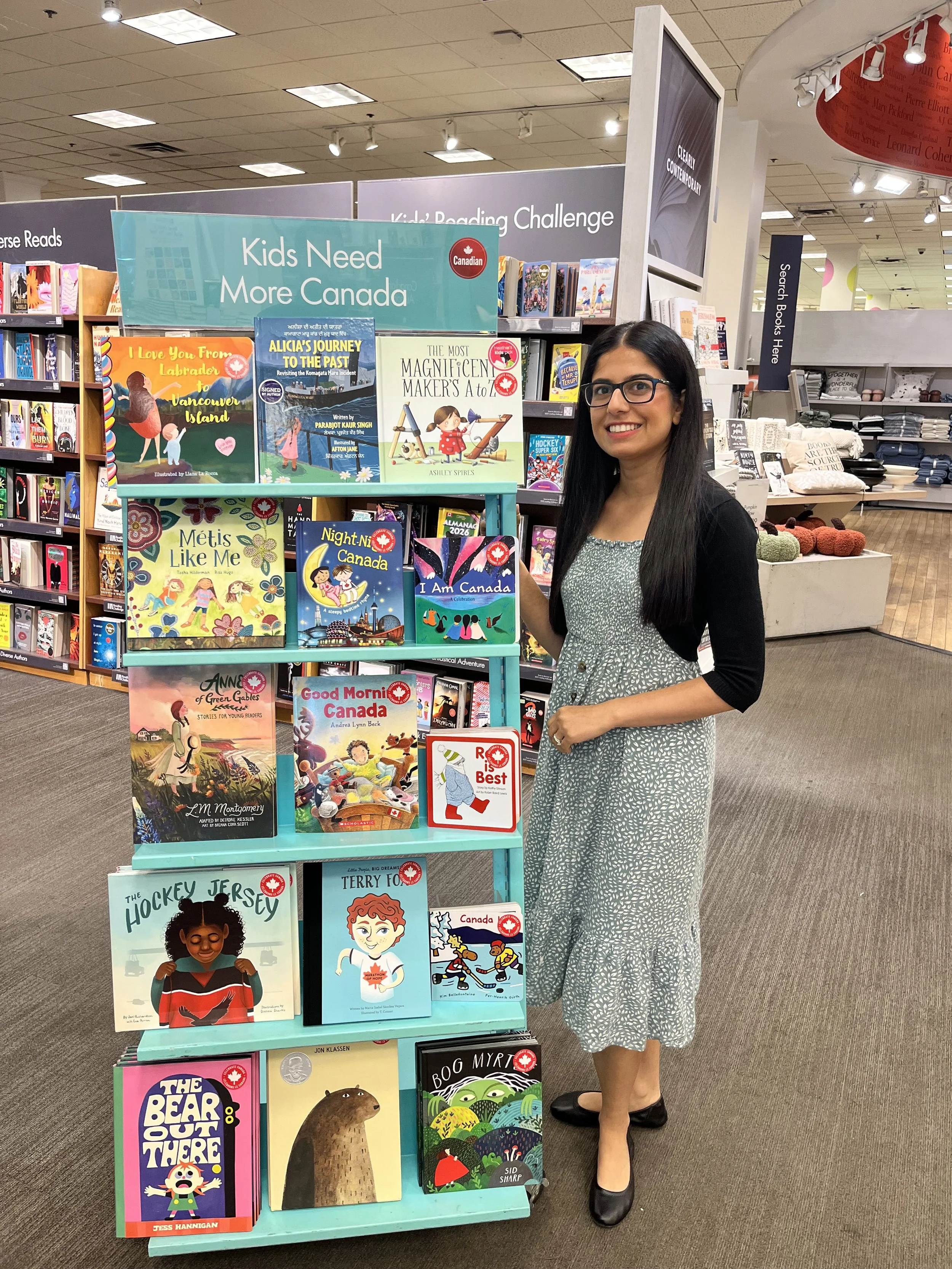
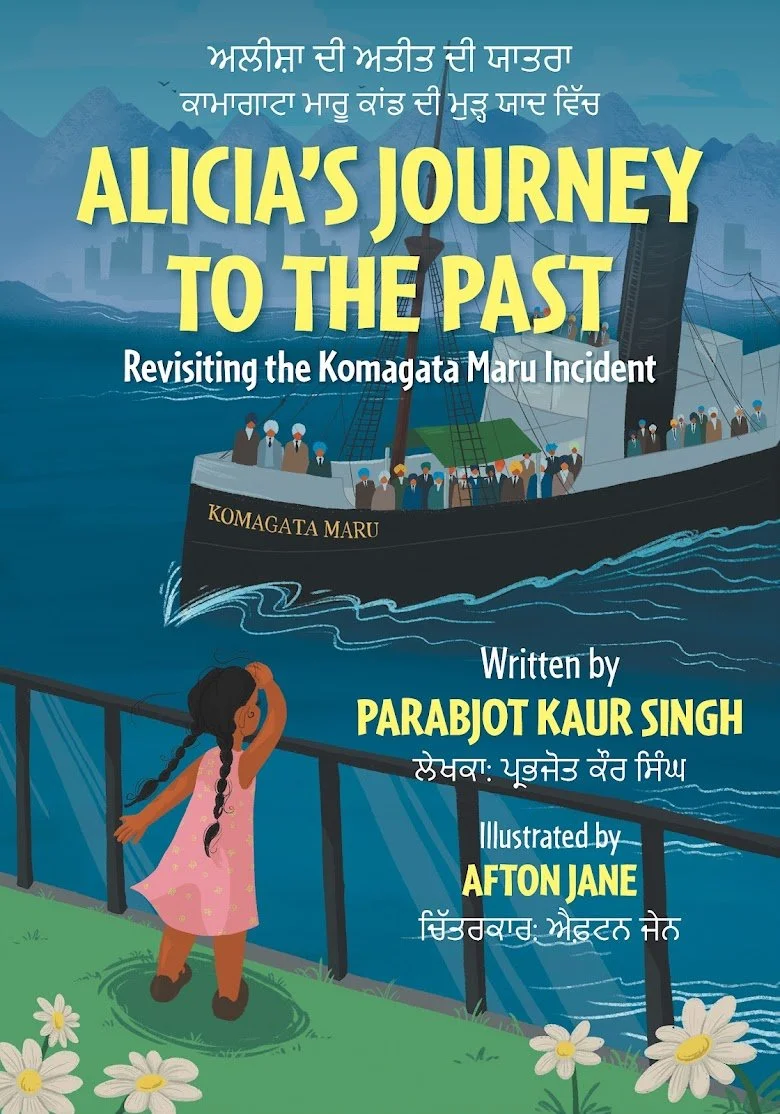
In Alicia’s Journey to the Past, educator and FriesenPress children’s author Parabjot Kaur Singh brings this history to young readers through a bilingual, intergenerational story. Born in Vancouver and raised in Surrey, Singh is a second-generation Canadian with family roots in Punjab. She grew up speaking Punjabi at home and English at school, developing a strong command of both languages that later became central to her writing.
In recognition of Asian Heritage Month and its spirit of remembrance, our interview with Parabjot explores her personal connection to the Komagata Maru story, the creation of her character Alicia, and why she believes it’s so important for young people to encounter and engage with history early.
As an author working in two languages, where did your interest in reading begin?
Growing up in Surrey, I spoke Punjabi at home with my family and English at school. I grew up with a good command of both languages which I incorporated into my book.
Literature and books were all around me as I was growing up. During my primary school years, my grandfather was actively involved in my education and instilled the life-long habit of reading in my life. I brought colourful storybooks home from the school library and my grandfather, Papa Ji, read to me every night before bedtime. He would read a few sentences in English and then translate these into Punjabi. After I grasped the English language, Papa Ji introduced the Punjabi alphabet to me. I learned how to write the Punjabi letters using the Gurmukhi script in grade 3. The translations in Alicia’s Journey to the Past are written in Punjabi using the Gurmukhi script. While Gurmukhi is the popular script used in east Punjab, Punjabi is written using the Shahmukhi script in west Punjab.
Furthermore, the high school I attended offered Punjabi language courses in grades 11 and 12. Since I needed a second language requirement for university, I took Punjabi 11 along with French 11. I loved learning languages! In the Punjabi 11 course, I learned how to use Punjabi grammar in depth and my fluency in the language improved drastically. I also got the opportunity to take a third year Canadian-Punjabi literature course during my undergrad. I earned my BA in English with a minor in psychology from KPU. Soon after, I attended UBC to pursue my Bachelor of Education in secondary teaching, specializing in English.
What originally drew your attention to the Komagata Maru?
In the BC school curriculum, this incident is taught in the social studies and Punjabi curriculums. Punjabi courses cover a wide range of topics: grammar, reading, writing, history, and culture. As I was growing up in the lower mainland, I didn’t learn about the Komagata Maru, and other topics related to the history of Punjabis in Canada. As I learned about the Komagata Maru in depth through teaching, I realized there are so many hidden stories, narratives, historical events and experiences of Canadians with Punjabi heritage to unravel. While there is a lot of academic research and resources on the Komagata Maru, there are limited resources for children and teens about Canadian history with a focus on Punjabi immigrants in Canada. In order to make a positive impact within and beyond the Punjabi community in Canada, I wanted to write something that can educate and promote awareness of Canada’s historical wrongs such as the Komagata Maru Incident, also known as the Guru Nanak Jahaz -a name which is now being reclaimed by individuals and some organizations within the Punjabi community in Canada.
Who is the character of Alicia?
Alicia is a third generation Canadian with Punjabi roots whose parents are also born and raised in Canada. Alicia’s physical appearance is definitely inspired by my childhood. I was the “brown girl” with long, black hair braided into two pigtails. Like my parents, Alicia’s grandma, Naanee Jee, was also born in Punjab.
I wanted to illustrate Alicia’s relationship with the elders in her family and how her identity as a third generation Canadian is shaped according to time, place and land. Since Punjabi culture is a collectivist culture, grandparents play a crucial role in Punjabi families. I had privilege and access to family stories and narratives from the past through my grandfather in the same way as Alicia. Moreover, when I was growing up in Surrey, I struggled with accepting my own Canadian identity. Fitting in with ‘mainstream’ and ‘Punjabi’ communities was challenging because I felt a push and pull between both cultures -something that most children of immigrants go through. Alicia, on the other hand, doesn’t feel the same way as I did; instead, she shows curiosity and wonder -two traits which helped me develop and accept my own identity.

I chose to name my character “Alicia” -a western name. Many people have asked why I didn’t provide a name with Sikh / Punjabi origin for my main character. The reason is simple. The Punjabi immigrant population was small in Canada during the 1960s and 1970’s. In order to fit in and be accepted into mainstream Canadian society, many Punjabi immigrant families named their Canadian-born children using western names, or the children gave themselves western nicknames. The purpose was to reduce or eliminate discrimination, and racism. The name “Alicia,” as a result, signifies the historical systemic struggles of acceptance and belonging.
Why was it important that this book be bilingual?
It was important for this book to be bilingual because I wanted to bridge the gap between English and Punjabi. Language is the pathway to heritage, culture, music, oral storytelling, narratives and even a sense of humour. As languages evolve, new dialects and ways of speaking also emerge over time. For instance, in the Punjabi translation, the dialogue between Alicia and her grandma is linguistically diverse in terms of Alicia’s Punjabi accent. She uses English words in her Punjabi sentences, and she speaks Punjabi with a Canadian accent. Since bilingual children’s literature is a coming-of-age genre, I wanted to produce a book with Canadian content; where kids who are born or raised in Canada, like me, can relate to the Canadian characters with Punjabi heritage and preserve Punjabi language as their mother tongue. I did not have access to these kinds of books as I was growing up!
As a teacher yourself, why do you feel that young people today should learn about this event?
Young people today should learn about this incident because it’s an important piece of Canadian history. I strongly believe that it’s important for children to be introduced to important pieces of history such as the Komagata Maru at an early age. By learning about these topics, children learn to ask questions, develop empathy and critical thinking skills. I also believe that the past, present and future are interconnected. If we want to grow and evolve into positive, healthy human beings, we must learn from our past, make positive choices in the present, and create a healthy life that will benefit our families, communities and the broader society.


