

How Romance Tropes Can Help Readers Fall in Love with Your Book
/
One bed. Slowburn. Grumpy x sunshine. “Who did this to you?”
No, this isn’t the start of a rejected ‘Mad Libs’ game – these are a few examples of how romance authors can connect with today’s readers. And that’s because they’re popular romance tropes.
The word trope has long been used as a catch-all term for figures of speech but Merriam-Webster’s definition as a “common or overused theme or device” is the most connected to our current use of the word. While virtually every book genre has common themes and devices, romance in particular is overtly passionate about highlighting the tropes within books and movies.
In fact, romance tropes have taken the book genre by storm, with authors now listing them in their book’s description, retailers (like Indigo, see screenshot below) listing sections for readers to shop by trope, and readers even blindly purchasing books based on their favourite archetypes.

Many romance readers, including myself, will have tropes that we love, those that we hate, and those that we’ve never even heard of. Tropes give us a glimpse into what we can expect from a book — whether it’s the characters' relationships, the setting or the plot points. In this genre that requires “happily ever afters”, readers often use tropes as one of the ways to discern if this book will be swoon-worthy for them and worth taking a chance on.
Self-published romance authors in particular can leverage tropes to help get the attention of readers who have never heard of them or their book. Part of the challenge when promoting your book is convincing a reader to take a leap of faith and purchase a book written by someone they are unfamiliar with. If this reader knows your book includes some of their favourite tropes, they may feel more inclined to get a copy and fall in love with your book.
Feeling uncertain about where to start or unsure how to use tropes in your book promotions? Your romance fairy godmother is here to help! Read on for your primer on identifying romance tropes and how to weave them into your book marketing efforts.
How to Identify Your Book’s Romance Tropes
While some authors choose their tropes first and write a book based on those, the more common author experience is to have already written a romance novel that you are now looking to identify the tropes within. An important first step in choosing your romance tropes is to identify these key aspects of your book:
Subgenre
Setting
Overall content

Your book’s subgenre(s) could be found in your book’s BISAC codes or keywords — or perhaps it’s something you already know. Listing your book’s subgenre, setting and overall content will give you a starting place to begin researching tropes within your specific corner of the romance genre. They can be plot or character-related, so the more details you have for this base, the more you’ll have to work with when it comes to selecting and (even creating) the tropes most relevant to your book.
Let’s walk through an example.
Subgenre: Contemporary Romance
Setting: Small town
Overall content: The male main character (MMC) moved away for post-secondary but is back and reunites with a past flame who has a daughter with the same eye colour as his…
With this list, we now have multiple entry points to help us outline this book’s tropes. We could do an online search for “contemporary romance tropes” or “small town romance tropes” to get the ball rolling. We could even look up similar books to see what tropes they identified for their book, as they may be similar or spark an idea for your specific novel.
For our example, Elsie Silver’s book Reckless has some similar plot points and could be used as a jumping off point. We could look up the book on social media to see what people are saying and if there are any posts that list the tropes used within her book. Tropes could be typed out in a post itself, mentioned in a video, or used as a hashtag in the caption.
With all this in mind, our example book’s tropes could be:
Second Chance Romance
Secret Baby / Secret Child
Forced Proximity
He Falls First
Cowboy Romance
Grumpy x Sunshine (meaning: our MMC is grumpy, but the FMC is friendly/sunshine-y)
There is no set quantity that you need or “should have”; while it may be tempting to try to list out dozens of tropes in order to catch the attention of many readers, casting a wide net can oftentimes lead to your message being too general and not reaching your target reader. Honing in on a few key tropes in your book will help ensure that your messaging is well-tailored to you and your audience.
Don’t worry about reinventing the wheel here! While you can absolutely create some unique tropes that are specific to your book, it is common (and encouraged!) to also use some recognizable ones. This is especially important when it comes to how to utilize these tropes in your marketing and promotions of your book within the community.
How to Use Romance Tropes in Your Book Marketing
With the homework out of the way, it’s now time for the fun part: using your romance tropes to connect with authors and readers in the romance genre — in a multitude of ways!
Weave into your Elevator Pitch and Goodreads
An elevator (or sales) pitch is a handy bit of language to have prepared for any impromptu book-related meetings — including your stock answer to the classic question of “what’s your book about?”. This succinct description of your book provides some clarity on your book topic while also leaving your listener wanting to learn more (and even make a purchase).

Since specific tropes can be an immediate “buy” for some readers, you can weave a few tropes into your pitch or list them at the beginning/end. When visiting your local bookstore, check to see if they have any tables dedicated to specific tropes. When pitching your overall marketing plan, you can highlight how your book has a few popular tropes that could be grouped at future tables or highlighted in promotional posts (i.e., “Come meet the author of Title: a new and enthralling dark academia romance, where friends become enemies and enemies become lovers.”).
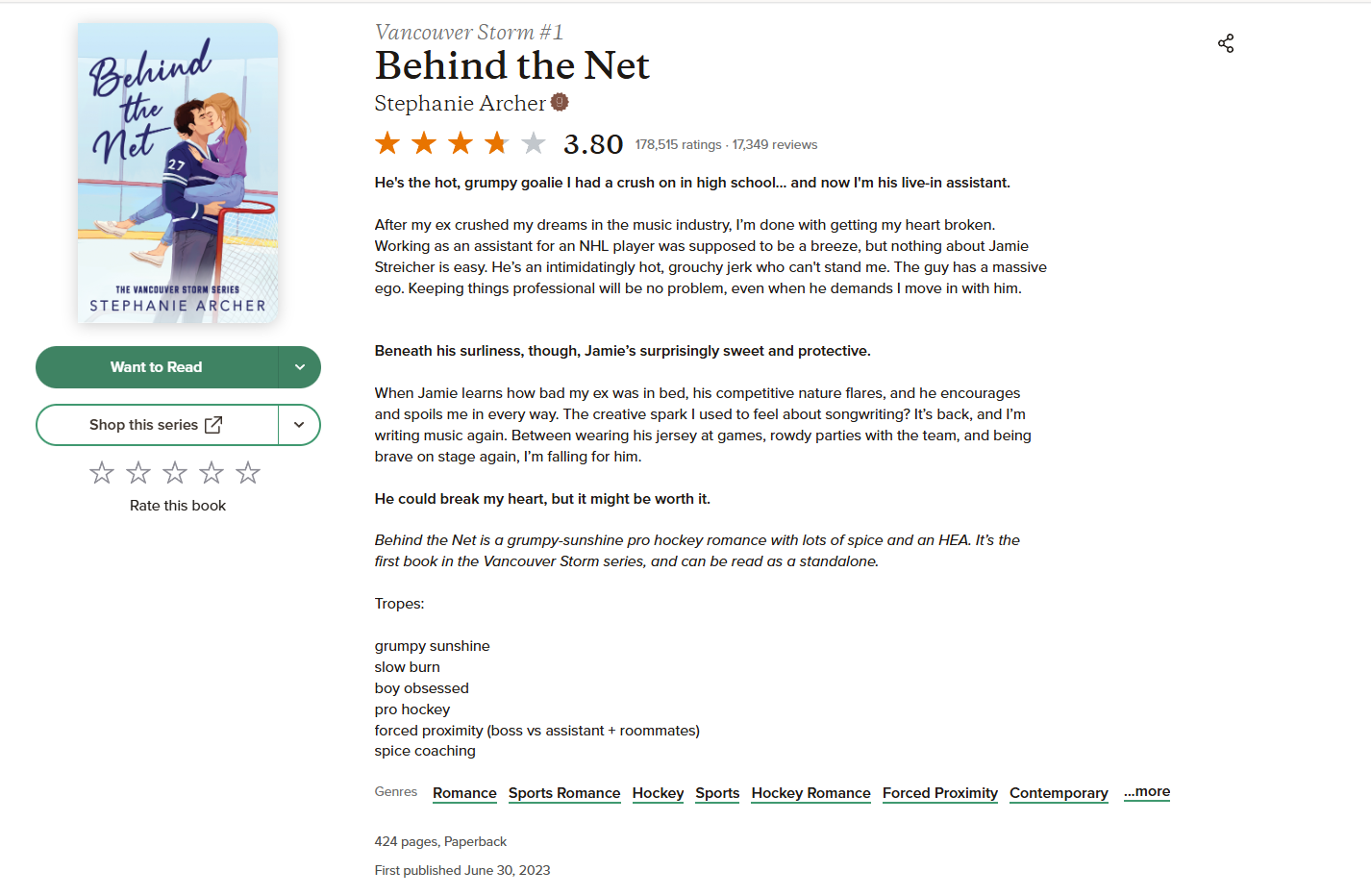
This can affect your Goodreads strategy as well! Goodreads is a popular platform for readers to track and review their recent reads; it’s an online space where readers are often searching for books, adding them to their “Want to Read” lists, and exploring suggested titles. Similar to your elevator pitch, you could explore showcasing your tropes on your book’s Goodreads listing through the Goodreads Author Program. Authors in the program currently have the option to edit their book’s description and can add in additional information (as long as it adheres to their Librarian Manual).
An example of this is established Canadian author Stephanie Archer, who includes a list of tropes for her books in her Vancouver Storm series on their Goodreads pages (e.g. Behind the Net):
Connecting with Authors and Influencers Online
Building on the research you may have already done when creating your list of tropes, you’ll want to look for readers and authors who have written and read books with the same tropes you’ve highlighted in your book. This is where not reinventing the wheel comes in handy, as tropes that are popular will make it easier to find the authors and influencers most strongly connected to them. Taking a scroll through these authors and readers will give you a glimpse into the posts they share, trends they join, and hashtags they use which you can weave into your own social media presence to reach a similar audience.
You can also consider reaching out to these authors and influencers to inquire about a collaboration or offer a free copy of your book for review. This can be a great way to expand your visibility by reaching a new audience if you’re highlighted on other accounts. The romance genre is a very supportive community, with many authors sharing release dates for fellow authors and readers resharing announcements and content from accounts they follow.
Since you want to share content that isn’t solely related to your book's promotions, highlighting some of your recent reads and tagging those authors can be a way to diversify your content and authentically engage with the community. For more information about connecting with influencers in the industry, check out our blog post How to Identify and Connect with Influencers that dives deeper into this process.
Showcase in your Social Media Content
While searching for inspiration as you created your list of tropes (or during a quick scroll on social media as a romance reader), you’ve likely already seen content featuring tropes. There are many creative ways to showcase your book’s tropes in order to catch the eye of a potential reader. As mentioned above, many readers have favourite tropes that they seek out and they will pick up books solely based on tropes that are listed.
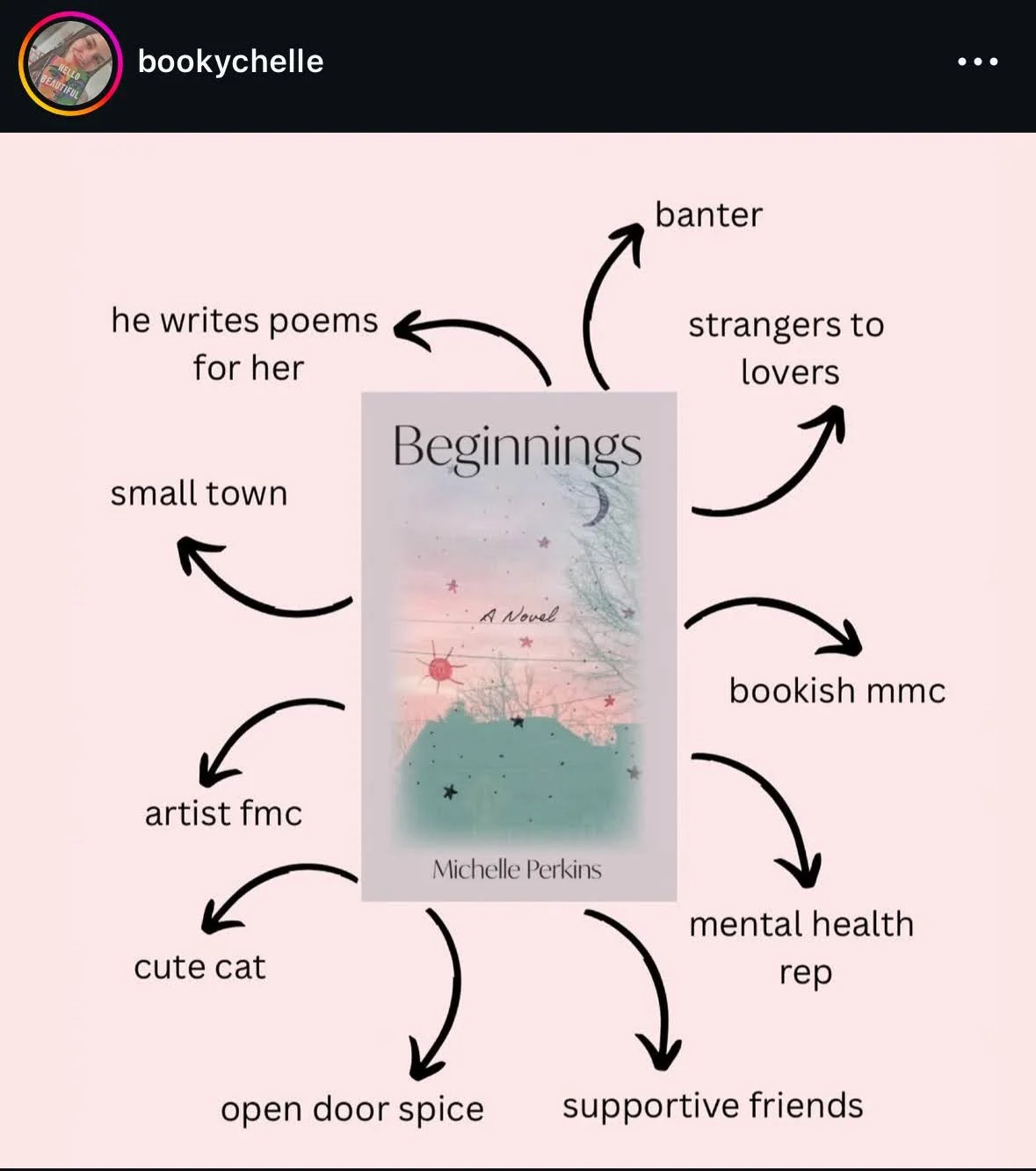
One example of utilizing tropes in a photo post comes from FriesenPress author, Michelle Perkins, who recently published her romance novel Beginnings and highlighted her book’s tropes in an introductory post on her @bookychelle Instagram. The tropes alongside the cover take center stage of the post and give viewers a vivid glimpse into the book before they’ve even read the caption.
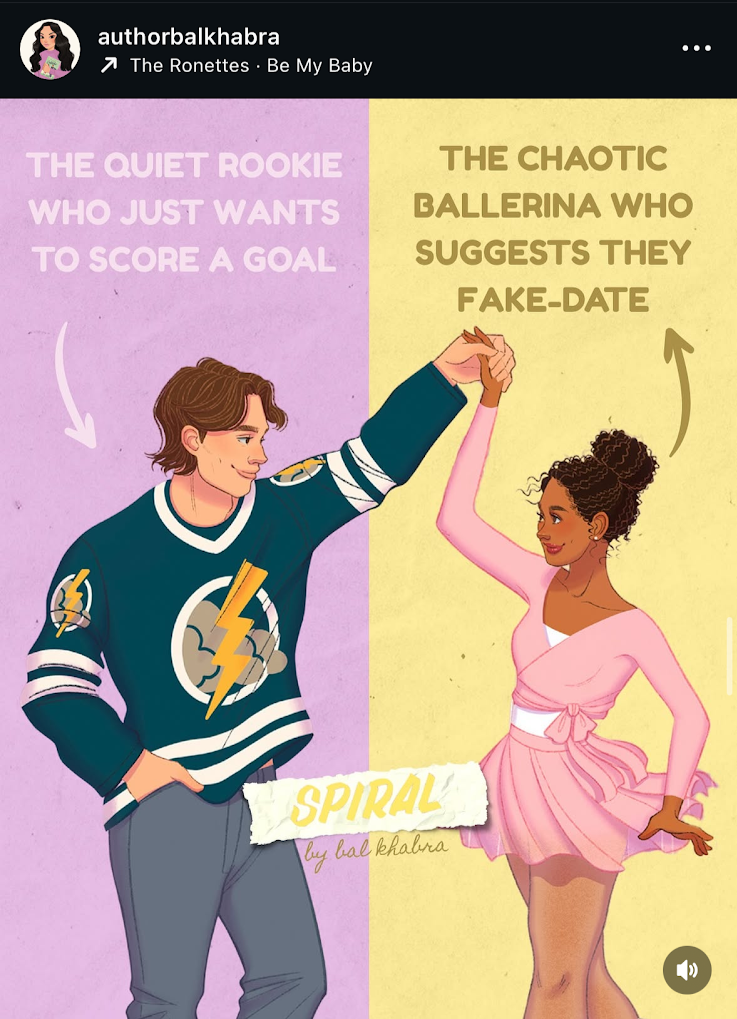
Your tropes can also be used in your caption of a social media post that highlights a different aspect of your book, like a snippet of dialogue between the love interests or character art. For example, Bal Khabra (Canadian author of the ‘Off The Ice’ series) shared the tropes for Spiral in a past post. The caption (below) was paired with an image of the characters and a quick blurb about both of them. This multimedia approach offers a variety of “hooks” to catch someone on their daily scroll.
“I guess it just takes the right woman to come along.”
“And I’m the right woman?”
“The perfect one.”
•••
📖 SPIRAL
💛 hockey player x ballerina
💐 fake-dating
💛 accidental roommates
💐found family (literally)
And of course, when talking about social media video content always needs a mention! Tropes can also be a fun teaser video to share about your book pre or post publication. Ella McGivern created a TikTok video listing the tropes for her book Ski You Later or Ana Huang shared a video highlighting some character art and blurbs that describe the tropes within her book The Defender.
Conclusion
Romance tropes are embedded deep in the romance reading community and can act as an exciting entryway for readers to connect with a book and for authors to connect with their readers. Whether they’re woven into conversations at an event, shared in a social media post, and more, these tropes can be a downright essential tool throughout your book’s promotions.
As with anything related to your book’s promotions journey, make sure to have fun! The more you enjoy yourself during promotional activities, the more your audience will as well. Identifying your book’s tropes and brainstorming ways to use them can be an opportunity to fall deeper in love with your own book — while sharing that love with your readers.

Natasha Kelly is a FriesenPress employee owner and book promotion specialist, where she supports authors in the exciting chapter of sharing their published book with the world. Before her current role, she earned a bachelor’s degree in English and a bachelor’s degree in Education at the University of Calgary. An avid romance reader and budding bookstagrammer, you can find her talking about her current reads and sharing her “mugs & fits” at @sometimessheisreading.


