
The Author's Guide to Crowdfunding [ Webinar Transcript ]
/
The following content comes from a free FriesenPress training session broadcast live on July 15, 2026 (edited for length and clarity). Register here to join us live on our next broadcast!
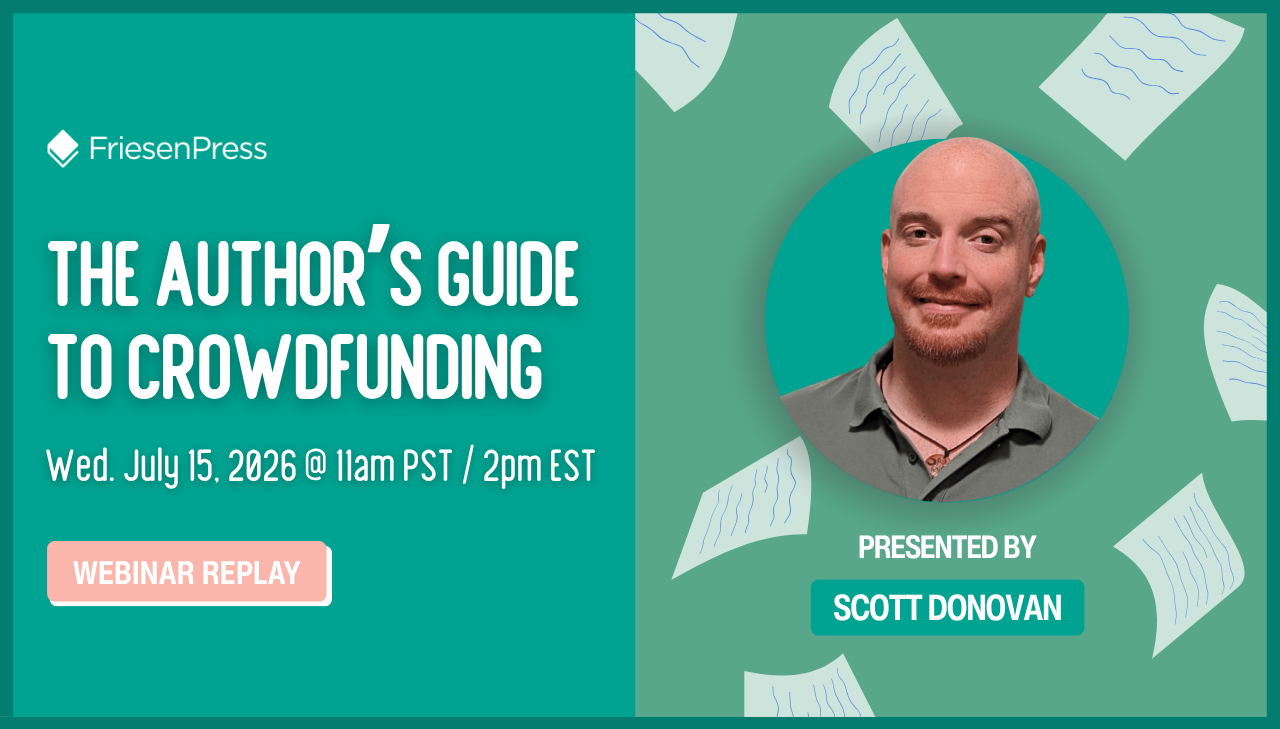
Greetings, folks, and welcome to The Author's Guide to Crowdfunding, a step-by-step walkthrough of the crowdfunding process designed to help set your next campaign up for success.
My name is Scott Donovan. I'm a Publishing Consultant here with FriesenPress, and I've been with the company for seven and a half years. My role is to meet with authors, discuss their publishing projects, help determine the best publishing path for their goals, and support them through every stage of the process, including crowdfunding.
Why Authors Should Consider Crowdfunding
If you've ever dreamed of self-publishing a professional-quality book but found yourself wondering how you were going to pay for it, you're in the right place.
For many writers, publishing costs become the biggest obstacle between a finished manuscript and a published book. They have passion. They have a story. They have the determination. They just don't necessarily have several thousand dollars readily available to invest in publishing. The good news is that there's another option.
Every year, first-time authors successfully crowdfund books because they understand one simple principle: People don't support books. They support stories, ideas, and the people behind them.
This presentation is designed to show you how to become one of those success stories.
What Is Crowdfunding?
Let's start at the beginning. Simply put, crowdfunding is another term for online fundraising.
Crowdfunding is the process in which an individual or group runs a time-bound, goal-based fundraising project, called a crowdfunding campaign, to raise enough money to cover the costs of bringing a project to life. Campaigns are hosted on crowdfunding platforms such as Kickstarter or Indiegogo.
As the creator, you'll set your campaign timeline and fundraising goal while telling the story behind your project and explaining how the funds will be used. Support is generated through marketing, word of mouth, and sharing your campaign with your network, and hopefully well beyond it. In exchange for supporting your campaign, contributors receive rewards that you create as incentives.
With most crowdfunding platforms, money only changes hands if the campaign reaches its funding goal, creating a win-win scenario for both creators and supporters. Crowdfunding also reduces financial risk by spreading production costs across a large group of supporters.
Many successful books have been crowdfunded, including the Friesens-printed Good Night Stories for Rebel Girls.
Why Crowdfunding Matters for Authors
Crowdfunding provides writers with the capital they need to produce and market a high-quality book, but there are several other excellent reasons why authors should consider it:
Test the Market for Your Book
Crowdfunding is a great way to gauge interest in your book before it's published. If your campaign funds successfully, it's a strong indicator that there's a market of readers willing to purchase your book. Conversely, if your campaign falls short of its goal, you gain valuable insights that can help you improve your pitch, refine your messaging, or rethink your reward structure.
Either outcome provides valuable market research that you can learn from.
Build an Engaged Audience
A successfully funded campaign creates a community of contributors who are literally invested in your success. Throughout your campaign, you'll engage with supporters, share updates, and develop your personal brand.
When it's time to write your next book, you'll already have a growing audience that's excited to hear from you.
Generate Early Book Sales
Selling print books and ebooks is one of the most common crowdfunding rewards.
If your goal is to recoup your publishing investment or even make a profit, crowdfunding can accelerate that process. Because your campaign is designed to cover all or part of your publishing costs, every book you sell after publication brings you much closer to breaking even or becoming profitable.
Publish Better Books
Books that might otherwise never be published now have a pathway to market, and authors can afford the professional editing, design, and production services needed to release a higher-quality book than they might have otherwise.
A successful campaign gives writers something incredibly valuable: a professionally funded book, an invested audience, and complete creative control over their project. Of course, making that happen takes preparation.
Choosing the Right Crowdfunding Platform
Before you can launch your campaign, you need a place online where supporters can discover your project and contribute. This is where crowdfunding platforms come in.
Platforms like Kickstarter and Indiegogo provide the tools you'll need to run a successful campaign. Each platform has its own rules and eligibility requirements, so be sure to review them carefully before getting started.
Most campaign pages include the same core elements:
A campaign title
A short tagline describing your project
A compelling campaign image or video
Campaign details, including your fundraising goal and deadline
Your author profile and social media links
A campaign summary explaining your book and why you're crowdfunding
Reward tiers for contributors
One of the most important parts of your campaign is your reward structure.
Aim to offer five to seven reward tiers, beginning as low as $1 and extending up to $5,000 for your highest-level supporters.
Your campaign page should tell a compelling story while enticing visitors with meaningful rewards. However, it's important to remember that it's your job to bring people to the campaign page.
That means asking friends and family for support, sharing your campaign across social media, reaching out to your network, and using every creative marketing opportunity available.
We'll talk much more about marketing later in today's presentation.
A Note About GoFundMe
I also want to mention GoFundMe. While it's a popular fundraising platform, it isn't generally recommended for book crowdfunding. GoFundMe is primarily designed for charitable causes and personal emergencies, and it doesn't offer the reward-based structure that makes platforms like Kickstarter so effective for authors.
Understanding Fixed Funding
Most crowdfunding platforms use what's called fixed funding. With fixed funding, if your campaign falls short of its fundraising goal, you don't collect any of the money.
At first glance, that might seem intimidating, but fixed funding actually creates one of the biggest advantages of crowdfunding: urgency. Both you and your supporters know that the campaign must reach its goal in order to succeed. That shared sense of urgency often motivates contributors to pledge sooner and encourages everyone to help spread the word.
How to Calculate Your Crowdfunding Goal
One of the biggest misconceptions about crowdfunding is that your publishing budget and your crowdfunding goal are the same number. They're not.
Your crowdfunding goal needs to cover:
Your publishing costs
Reward fulfillment
Payment processing fees
Crowdfunding platform commissions
Fortunately, calculating your goal can be broken down into four simple steps.
Step 1: Set Your Publishing Budget
Before you can calculate your crowdfunding goal, determine what you'll actually need to publish your book.
Ask yourself questions like:
Will you need time away from work to finish your manuscript?
How much will professional editing cost?
What about cover design and interior layout?
How much do you want to budget for marketing?
Take time to research these costs. At FriesenPress, we can also help you build a realistic publishing budget.
Step 2: Add Reward Fulfillment Costs
Once you've established your publishing budget, you'll need to estimate the cost of fulfilling your crowdfunding rewards.
For example, let's imagine your publishing budget is $2,800.
Based on our experience with crowdfunding campaigns, you'll want to add approximately 20% for reward fulfillment.
Publishing budget: $2,800
Reward fulfillment (20%): $1,400
New subtotal: $4,200
Step 3: Account for Platform and Payment Fees
Next, you'll need to factor in crowdfunding platform commissions and payment processing fees.
Most platforms charge approximately 5%, while payment processors charge another 5%, meaning you'll receive roughly 90 cents of every dollar pledged.
Before doing your calculations, check the exact fee structure for your chosen platform. Kickstarter's Campaign Builder even includes a calculator to help verify your numbers.
Step 4: Calculate Your Funding Goal
Now divide the amount you actually need by the percentage you'll receive.
Using our example:
$4,200 ÷ 0.90 = approximately $4,700
That means your crowdfunding goal should be about $4,700.
This ensures you'll have enough money to publish your book, fulfill your rewards, and stay within your original publishing budget.
One final tip: remember that your crowdfunding goal doesn't necessarily have to cover your entire publishing budget.
If you've already saved some money toward your project, for example $2,000, you can crowdfund only the remaining amount. Doing so reduces the impact of crowdfunding fees while still protecting the personal investment you've already made.
Building the right funding goal is something we help authors with every day at FriesenPress, and it's one of the ways our Publishing Consultants can help set your campaign up for success.
Developing Your Campaign Message
Think of your messaging as your campaign's packaging.
It shapes everything from your campaign page and reward descriptions to your emails and social media posts.
The first questions you should ask yourself are:
What is the core message holding this campaign together?
How will I persuade people to support my project?
Next, think carefully about your audience.
Ask yourself:
What do they enjoy reading?
How old are they?
What are their hobbies and interests?
Where do they spend their time online?
Creating a simple mind map can help you organize these different audiences and identify the messages that will resonate with each group.
Once you understand who you're trying to reach, you can build a campaign message that speaks directly to them.
If you're new to marketing, don't worry.
This is actually a great place to learn, because these are the same questions you'll ask when it's time to market your book after publication.
Think about what makes you, and your project, unique.
Is your memoir built around an extraordinary life experience?
Is your nonfiction book teaching readers a valuable skill?
Is there something about your personal story that makes your project especially compelling?
Whatever it is, tell your audience the story behind your book. That's what they'll connect with.
Q/A Section
Which Crowdfunding Platform Is Best for Authors?
Scott: It's an interesting question because, when crowdfunding first became popular, several platforms emerged hoping to become the dominant name in the space.
If I had to choose one today, I'd say Kickstarter has probably established itself as the leading platform for book crowdfunding. That said, I'm always a fan of the underdog, and I think Indiegogo is an excellent alternative.
Explore both platforms and see which one feels like the best fit for your project, but based on what we typically see from authors, Kickstarter is the most widely recognized and commonly used.
Can Authors Outside Canada Run Crowdfunding Campaigns?
Scott: Absolutely. One of the greatest advantages of crowdfunding and social media is that you aren't limited by geography. Not only can you raise funds online, but you can also market your campaign to readers anywhere in the world who are interested in your subject matter.
We've worked with Canadian authors who wrote books for readers in Ireland and successfully focused their entire marketing strategy overseas. Crowdfunding works much the same way, you can build an audience wherever your readers are.
One thing to keep in mind, however, is that crowdfunding platforms have their own eligibility requirements depending on the country you're operating from. Before launching your campaign, be sure to review your chosen platform's requirements to confirm it's available in your region.
Kickstarter or Patreon: Which Should Authors Use?
Scott: My answer? Why not both? These platforms serve different purposes and can actually complement one another. Kickstarter is designed around a specific project with a defined beginning and end. It's an excellent way to fund the production of a book. Patreon, on the other hand, is built around ongoing support. It's designed for creators who regularly produce content and want to build a long-term community of supporters through recurring monthly memberships.
One example that comes to mind is The Lovecraft Investigations audio drama. They successfully raised more than £200,000 through Kickstarter while also maintaining a thriving Patreon community. Patreon is fantastic for keeping readers engaged between projects, while Kickstarter excels at funding a specific creative goal.
Ultimately, your choice depends on what you're trying to accomplish. If you're launching a single book, Kickstarter is likely the better fit. If you're looking to build an ongoing relationship with readers, Patreon can become an excellent long-term companion.
What Counts as Behind-the-Scenes Content?
Scott: Writing has a romantic reputation. People imagine authors sitting in a beautiful cabin somewhere, birds fluttering outside the window while inspiration magically appears. The reality is usually much different. Show your audience that reality. Share the paragraphs you rewrote ten times. Show different drafts of the same page. Record short videos explaining why you changed a chapter or struggled with a scene. Document the process of creating your cover, working with your editor, or even filming social media content. The bloopers alone can be entertaining. Anything that demystifies the writing and publishing process helps readers feel like they're part of the journey.
Think about all the questions you have right now as you're preparing to publish your own book. Those are often the exact questions your audience is curious about as well. Answering them through videos, photos, graphics, or updates creates engaging content that strengthens your connection with supporters.
When Is the Right Time to Launch a Crowdfunding Campaign?
Scott: Without knowing the specifics of your audience, it's difficult to recommend an exact number of followers or engagement level. Instead, I'd encourage you to look for a meaningful milestone that gives you a reason to talk about your campaign.
Maybe it's:
Your birthday
The anniversary of a previous publication
Reaching a follower milestone on social media
A seasonal event related to your book
A community event connected to your audience
Having a timely reason to launch helps create momentum and gives your marketing additional context.
How Should Authors Disclose AI Use?
Scott: This is a rapidly evolving area, so it's important to recognize that today's guidance could change as laws and industry standards continue to develop.
The distinction I like to make is between generative AI and AI-assisted writing tools. Generative AI creates original text for you. AI-assisted tools, on the other hand, might help you brainstorm ideas, create outlines, or edit work that you've written yourself.
Personally, I think using AI as a brainstorming or outlining tool can be incredibly helpful. I use it for outlining myself. If you're using generative AI to create portions of your manuscript, however, I believe disclosure is the right approach, and we're beginning to see more organizations requiring it. The biggest consideration is copyright.
Current guidance indicates that work created by generative AI generally cannot be copyrighted in the same way as work created by a human author. That has important implications if you're trying to protect your intellectual property.
It's also worth remembering that distributors and retailers currently have their own policies regarding AI-generated content. Those policies can change at any time, so authors should be aware of the potential risks before relying heavily on generative AI in their writing.
How Should Authors Handle an Overfunded Campaign?
Scott: If your campaign exceeds its goal, it's important to be transparent about how those additional funds will be used.
One approach is to reinvest them into the project itself by improving production quality, expanding marketing efforts, creating additional rewards, or supporting future creative work. Some creators introduce new "stretch goals" or additional rewards as funding increases, giving supporters even more value while maintaining excitement throughout the campaign.
Ultimately, exceeding your funding goal is a wonderful opportunity, but it also comes with responsibility. Your supporters have placed their trust in you. Communicating openly about how you'll use those additional funds helps strengthen that trust and builds lasting relationships with your readers.